
Man City’s logo meaning: Interesting facts of the new design
For much of modern history, Manchester United were widely regarded as the dominant force in the city. However, the balance of power has shifted in recent years, with Manchester City emerging as a formidable rival on both domestic and European fronts.
City’s rise has been underlined by sustained success, including four consecutive Premier League titles and a first-ever treble, achievements that have cemented their status among football’s elite. Much of that progress has been shaped by the influence of Pep Guardiola, whose emphasis on control and attacking football has defined the team’s identity.
As a result, the club has built a growing global following, drawn by both results and style. Yet, despite that prominence, the meaning behind the club’s crest is not widely understood. In this article, Soccer24 takes a closer look at the symbolism behind Manchester City’s logo meaning.
Man City’s logo meaning
It can be divided into 4 parts:
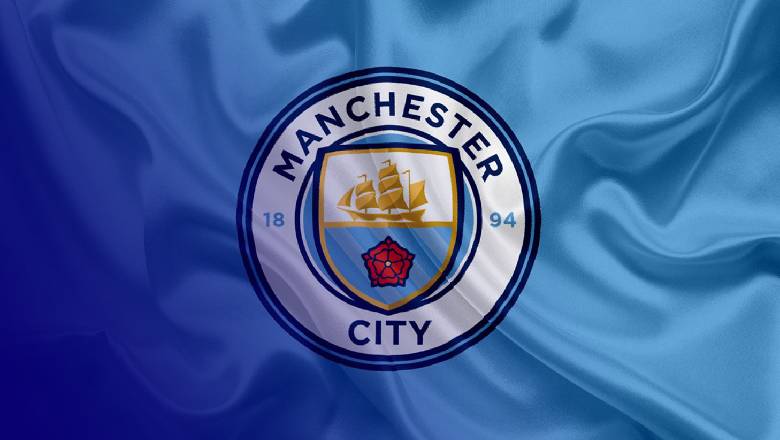
The current Manchester City badge draws heavily on the club’s visual history. Its circular frame echoes the design used from 1972 to 1997, a deliberate choice shaped by consultation with supporters. Within that ring sits a shield, a familiar feature taken from Manchester’s civic coat of arms, reinforcing the link between the club and the city it represents.
At the heart of the crest, the golden ship stands out as a defining symbol. It references the Manchester Ship Canal, opened in 1894, the same year the club formally became Manchester City. More broadly, it reflects the city’s past as a major trading hub and its long-standing reputation for enterprise and industry.
Beneath the ship, three diagonal stripes cut across the shield. These lines represent the rivers Irwell, Medlock and Irk, all of which run through central Manchester. Their inclusion ties the badge closely to the geography that shaped the city’s development.
Completing the design is the red rose of Lancashire. Although modern Manchester sits outside the historic county, the symbol remains an important nod to the club’s roots and regional identity.
Famous players who played for Man City
5. Colin Bell (1966-1979)
Known to supporters as “The King of the Kippax,” Colin Bell was the driving force behind Manchester City’s most successful era before the Abu Dhabi takeover. His influence on the side went beyond numbers, shaping the club’s identity during a golden period.
Bell spent 13 years at Maine Road between 1966 and 1979, registering 501 appearances and 155 goals from midfield. However, his trajectory was disrupted by a serious knee injury suffered in a Manchester derby in 1975, a setback that ultimately curtailed his peak years.
Even so, his output remains remarkable. Averaging close to a goal every three games from midfield, Bell’s numbers stand comfortably alongside modern figures such as Kevin De Bruyne and Ilkay Gundogan.
His legacy is firmly preserved at the Etihad Stadium, where in 2004 supporters voted to name the West Stand in his honour, a lasting tribute to one of the club’s greatest ever players.
4. Kevin De Bruyne (2015-2025)
When Kevin De Bruyne arrived from VfL Wolfsburg in August 2015, few could have predicted the extent of his influence. Yet over the following years, he became the central figure in what would evolve into one of the most dominant periods English football has seen. His consistency and vision set the standard in midfield, particularly under Pep Guardiola.
What sets De Bruyne apart is the completeness of his game. He combines the vision and range of a deep-lying playmaker with the delivery of an elite winger, while also carrying the goal threat of a forward. That versatility translated into silverware, including six Premier League titles and the UEFA Champions League triumph in 2023.
After leaving at the end of the 2024–25 season, he has since begun a new chapter with SSC Napoli, bringing his experience to Serie A.
Fastest player to reach 100 Premier League assists; holds the record for most assists in a single PL season (20, shared with Thierry Henry).
3. Vincent Kompany (2008-2019)
When Vincent Kompany arrived from Hamburger SV in August 2008 for a modest £6 million, Manchester City were on the brink of transformation. Within days, the Abu Dhabi United Group completed their takeover, yet amid the influx of expensive signings, Kompany established himself as the defensive cornerstone for more than a decade.
Initially signed as a holding midfielder, he evolved into a commanding centre-back and, ultimately, an iconic captain. Under Pep Guardiola, he refined his role further, contributing to build-up play and demonstrating sharp tactical intelligence despite recurring injury setbacks.
Across his time at the club, Kompany lifted four Premier League titles, while his leadership left a lasting imprint, later honoured with a statue outside the Etihad Stadium.
Now in management, he has taken charge of FC Bayern Munich, guiding a high-profile squad to the top of the Bundesliga and into the latter stages of the Champions League.
2. David Silva (2010-2020)
If Vincent Kompany provided the backbone of Manchester City’s rise, then David Silva was very much the mind behind it. The Spaniard dictated tempo and unlocked defences with a level of control that became central to the club’s evolution.
He arrived from Valencia CF in 2010 for £24 million, and early doubts about his physique quickly surfaced. Critics questioned whether he could cope with the intensity of English football. However, Silva responded in the only way he knew, by making himself almost impossible to dispossess.
Over the next decade, he made 436 appearances, scoring 77 goals and registering more than 140 assists in all competitions. His influence extended far beyond statistics, shaping City’s attacking identity during their most successful years.
Silva eventually brought his career to a close in July 2023, retiring after suffering a serious ACL injury while playing for Real Sociedad.
1. Sergio Agüero (2011-2021)
When Sergio Aguero joined from Atletico Madrid in 2011, he quickly proved to be more than just a prolific striker. Over the next decade, he became a defining figure in Manchester City’s rise, leaving in 2021 as a club legend with a legacy few can match.
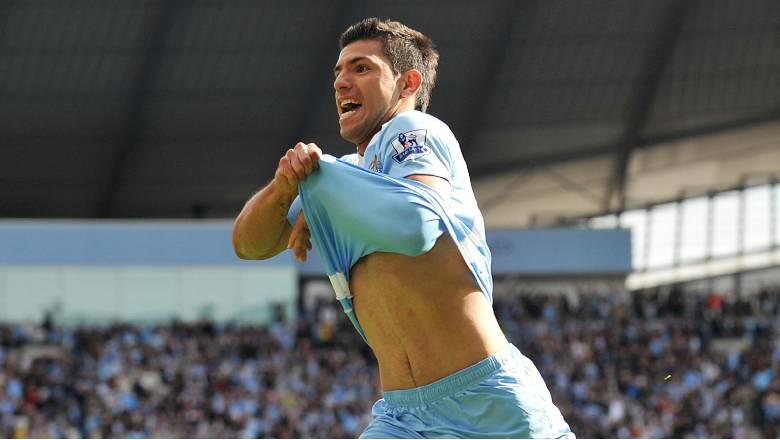
Across 390 appearances, Agüero scored a remarkable 260 goals, establishing himself as the club’s all-time leading scorer. His numbers tell only part of the story, however, as his influence in decisive moments consistently set him apart.
He was a constant problem for defenders. While not the tallest or fastest over distance, his sharp acceleration over the first few yards made him almost impossible to contain inside the box.
That quality was never clearer than on May 13, 2012. His stoppage-time winner against Queens Park Rangers remains one of the most iconic moments in Premier League history, later commemorated with a statue outside the Etihad Stadium alongside David Silva and Vincent Kompany.
Famous players who played for Man City
5. Colin Bell (1966-1979)
4. Kevin De Bruyne (2015-2025)
3. Vincent Kompany (2008-2019)
2. David Silva (2010-2020)
1. Sergio Agüero (2011-2021)
Soccer24.net has revealed Man City’s logo meaning, alongside famous players who played for Man City.
Visit our site to explore the latest football results, breaking news, and in-depth predictions from our experts.
The Most Popular
-
 How many games are in a League 1 season? The 5 most successful clubs in league history
 -
 Missing World Cup 2026: Why is Italy so bad at football recently?
 -
 What is Argentina's biggest win in football history? When Argentina produced a stunning two-digit victory
 -
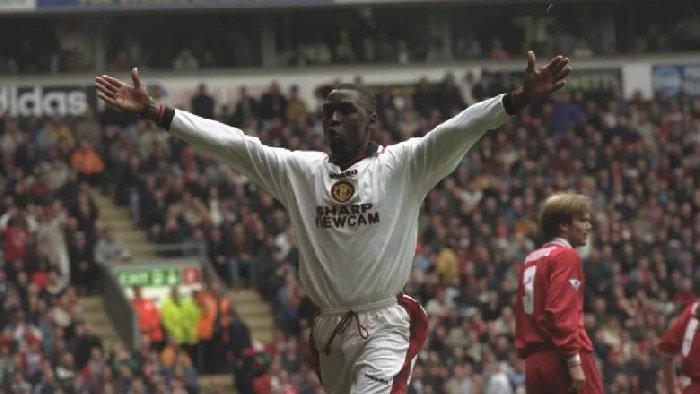 Who scored the most goals against Liverpool? The former Manchester United star leads the way
 -
 Real Madrid all time XI: The greatest Galácticos ever assembled
 -
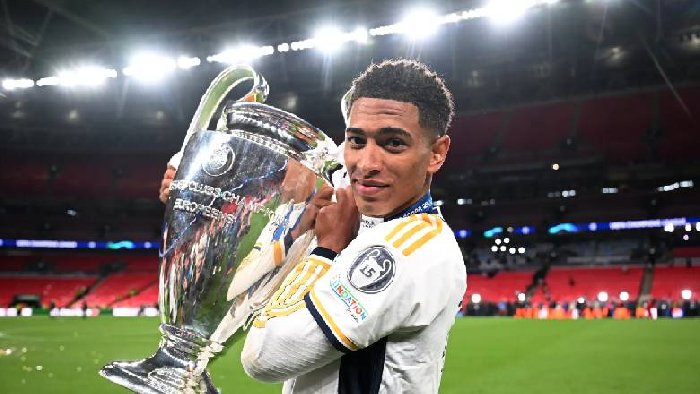 What position does Bellingham play for Real Madrid? Key facts about England’s superstar
 -
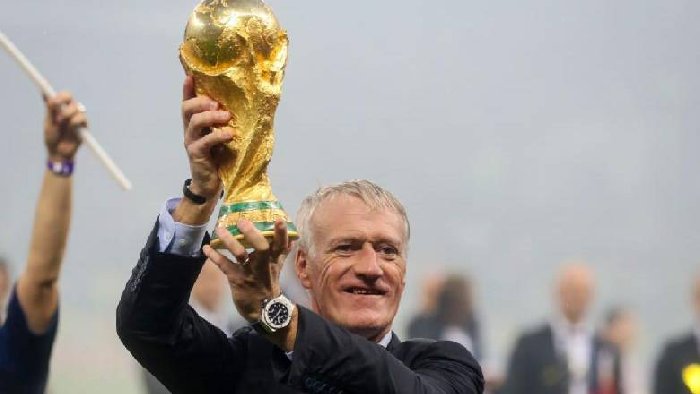 Who is the coach of France national football team? Interesting facts you should know
 -
 Top 5 greatest moments in World Cup history: The night Lionel Messi finally claimed his crown
 -
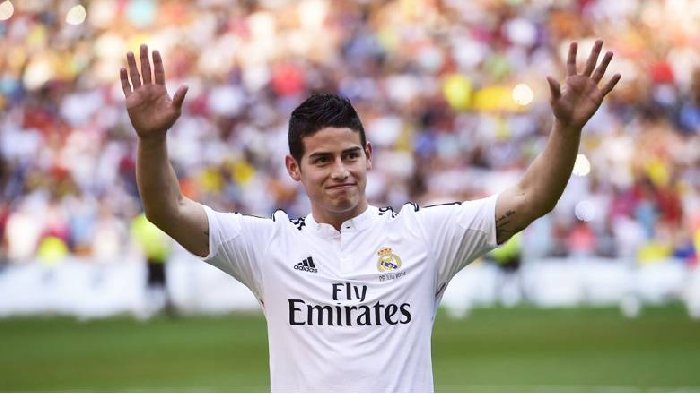 How much did Real Madrid buy James Rodriguez? Top 5 interesting facts of Colombian midfielder
 -
 How much did Real Madrid pay for Luka Modric? Some fun facts about the Croatian midfielder