
What does CDM mean in football? Top 5 best CDMs in football history
Football is a team game built on coordination between multiple roles across the pitch. With eleven players on each side, success depends on how effectively they link up, move the ball, defend as a unit and transition into attack. Within that structure, every position carries a distinct responsibility, yet some roles have become increasingly vital in the modern game, and the CDM is certainly among them.
So, what does CDM mean in football? Soccer24.net takes a closer look and breaks it down in this article.
What does CDM mean in football?
CDM is short for central defensive midfielder, a role positioned at the base of midfield. In common systems such as 4-3-3 or 4-2-3-1, this player operates in the space just ahead of the centre-backs and behind the more advanced midfielders, effectively linking defence with attack. Their core task is to shield the back line, while also serving as the first outlet when the team looks to build forward.
In today’s game, the demands on a CDM have evolved considerably. It is no longer a role limited to ball-winning duties, but one that requires a broad skill set and strong tactical discipline. Defensively, they are responsible for disrupting opposition moves and protecting central areas. In possession, particularly in systems associated with coaches like Pep Guardiola or Mikel Arteta, the CDM often dictates the tempo and initiates attacks from deep positions.
Equally important is their reading of the game. Positioned centrally, they tend to have the clearest view of the pitch, which allows them to organise teammates, maintain structure and ensure the side remains compact throughout different phases of play.
Top 5 best CDMs in football history.
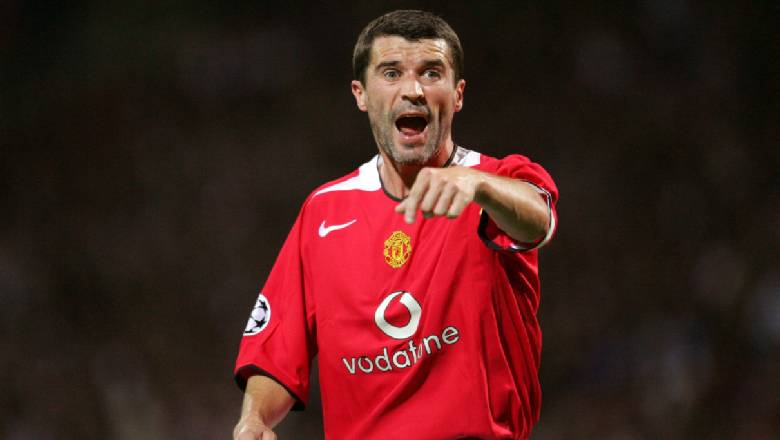
5. Roy Keane
Roy Keane captained Manchester United through one of the most successful eras under Alex Ferguson, establishing himself as far more than a holding midfielder. He was both the tactical fulcrum and the emotional driving force behind a dominant side. Across 480 appearances, he contributed 51 goals, although his influence extended well beyond numbers.
Early in his career, Keane operated as a relentless box-to-box presence, combining stamina with sharp technical ability. As the years progressed, he adapted into a deeper role, refining the fundamentals of the position. He excelled at reading danger, breaking up play and moving the ball quickly to more creative teammates, ensuring United maintained control.
Yet it was his mentality that truly defined him. Keane demanded the highest standards at all times, often challenging teammates even in comfortable victories. His honours include seven Premier League titles and the 1998-99 UEFA Champions League.
4. Patrick Vieira
Patrick Vieira and Roy Keane defined an era in the Premier League, their confrontations in midfield becoming a symbol of intensity and rivalry. As captains of Arsenal and Manchester United respectively, they embodied the dominance of two competing dynasties, and each meeting felt like a battle for control of the game’s central ground.
Vieira, however, brought a different dimension to the role. Combining physical presence with refined technique, he reimagined what a modern midfielder could be. Across 406 appearances for Arsenal, he operated as a powerful box-to-box force, capable of shielding the defence yet equally effective driving forward with the ball. Rather than simply recycling possession, he carried it through midfield, turning defence into attack with authority.
His honours include a FIFA World Cup in 1998 and three Premier League titles, notably as part of the Invincibles side of 2003-04.
3. Sergio Busquets
Sergio Busquets is often seen as the embodiment of intelligence in the CDM role, widely regarded as the most influential holding midfielder of the 21st century. As the understated fulcrum of FC Barcelona during Pep Guardiola’s era, and a key figure for Spain national football team, he built his reputation on control rather than flair. Across 722 appearances for Barcelona, before later moving to Inter Miami CF, his game was defined by positional discipline and precision in possession.
Busquets’ defining trait was his sense of timing. He had an unusual calm on the ball, often slowing the tempo to draw opponents out of shape before releasing a measured pass. Within Guardiola’s tiki-taka system, alongside Lionel Messi, Andrés Iniesta and Xavi, he provided the structure that allowed others to thrive.
His honours include the 2010 FIFA World Cup, three UEFA Champions League titles and nine La Liga trophies.
2. Frank Rijkaard
Frank Rijkaard was among the earliest players to fully define the demands of a modern defensive midfielder. A central figure in AC Milan’s dominant side of the late 1980s, he combined power, intelligence and technical quality, while also playing a key role in the continuation of the Total Football tradition shaped at AFC Ajax.
What set Rijkaard apart was his versatility. Equally comfortable as a centre-back or in midfield, he brought both physical authority and composure on the ball. He could impose himself in duels against the strongest forwards, yet still glide through midfield with control and precision. This balance made him a crucial link between defence and attack.
His honours reflect that influence, with three European Cup titles, two with Milan and one with Ajax, while he also finished third in the Ballon d’Or in consecutive years, just behind teammates Marco van Basten and Ruud Gullit.
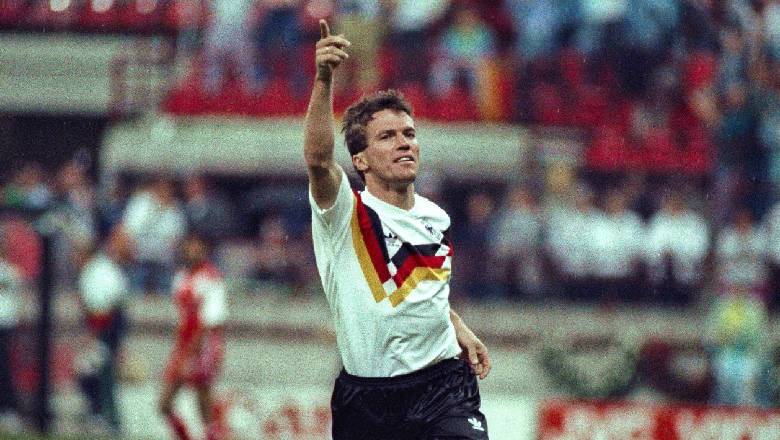
1. Lothar Matthaus
Lothar Matthäus earned the nickname “Der Panzer” for his remarkable blend of strength, endurance and technical quality, qualities that even Diego Maradona once acknowledged by calling him the toughest opponent he ever faced. What set Matthäus apart was his ability to excel across multiple roles. Over the course of a long and distinguished career, he evolved from a tireless box-to-box midfielder into a commanding defensive midfielder, before later redefining himself as a sweeper.
Across nearly two decades at the top level, including 150 appearances for Germany national football team, his influence rarely waned. As captain, he led his country to the 1990 FIFA World Cup and also claimed the Ballon d’Or that same year.
Operating from deep, Matthäus combined defensive awareness with creative vision, often initiating attacks with precise distribution, while his powerful long-range shooting made him a constant threat from distance.
Top 5 best CDMs in football history
5. Roy Keane
4. Patrick Vieira
3. Sergio Busquets
2. Frank Rijkaard
1. Lothar Matthaus
Soccer24 has answered the question: “What does CDM mean in football?”, while also presenting the top 5 best CDMs in football history.
Stay ahead of the game with updated football results, accurate odds, and daily predictions on our platform.
The Most Popular
-
 How many games are in a League 1 season? The 5 most successful clubs in league history
 -
 Missing World Cup 2026: Why is Italy so bad at football recently?
 -
 What is Argentina's biggest win in football history? When Argentina produced a stunning two-digit victory
 -
 Who scored the most goals against Liverpool? The former Manchester United star leads the way
 -
 Real Madrid all time XI: The greatest Galácticos ever assembled
 -
 What position does Bellingham play for Real Madrid? Key facts about England’s superstar
 -
 Who is the coach of France national football team? Interesting facts you should know
 -
 Top 5 greatest moments in World Cup history: The night Lionel Messi finally claimed his crown
 -
 How much did Real Madrid buy James Rodriguez? Top 5 interesting facts of Colombian midfielder
 -
 How much did Real Madrid pay for Luka Modric? Some fun facts about the Croatian midfielder