
Who is the coach of France national football team? Interesting facts you should know
France head into the 2026 FIFA World Cup as one of the standout contenders in international football. Their pedigree speaks for itself, having lifted the trophy in 2018 before finishing as runners-up in 2022. With a squad packed with top-level talent, led by Kylian Mbappé and supported by players competing across Europe’s elite leagues, expectations are understandably high for the tournament ahead.
Yet success at this level is rarely built on individual quality alone. It also depends on the direction from the touchline. So, who is the coach of the France national football team? In this article, Soccer24.net provides the answer while taking a closer look at the man guiding Les Bleus.
Who is the coach of France national football team?
The Didier Deschamps era continues to define the France national team. In charge since July 2012, he is not only a central figure in modern French football but also the longest-serving head coach in the nation’s history.
His current deal runs until July 2026, taking in the upcoming World Cup in North America. However, Deschamps has already made his intentions clear. Speaking in early 2025, he confirmed that the 2026 tournament will mark the end of his tenure, signalling the close of a 14-year cycle and the beginning of a new chapter for Les Bleus.
Results under his leadership have largely justified the faith placed in him. France lifted the 2018 World Cup, securing their second title, before adding the 2020-21 UEFA Nations League. They also came within touching distance of further glory, finishing runners-up at Euro 2016 on home soil and again at the 2022 World Cup, where they were edged out by Argentina on penalties in a final widely regarded as one of the greatest ever played.
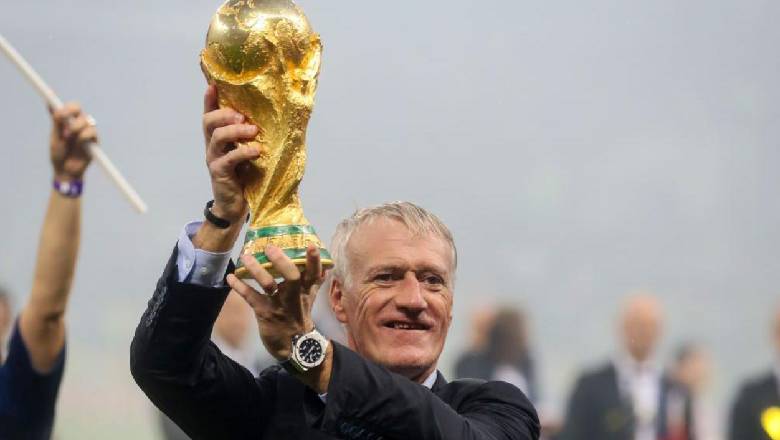
5 interesting facts about Didier Dechamps
1. He nearly walked away from football
Born in Bayonne, a city in the south-west of France with deep rugby roots, Didier Deschamps grew up as a multi-sport athlete. He spent his early years trying his hand at rugby, handball and athletics, even excelling in the 1,000 metres at school level. However, by the age of 11, he had made the decision to focus entirely on football.
That early exposure to rugby would go on to shape his identity on the pitch. As a defensive midfielder, Deschamps built his game around discipline, resilience and control in midfield duels. The same principles later carried into his coaching.
Physically, he also stood out. His background in athletics, particularly the long jump, gave him remarkable stamina for his era. It helped him cover ground relentlessly and earn the nickname “Water Carrier,” famously coined by Eric Cantona.
2. A career built on hard work
The label that would come to define Didier Deschamps was not always intended as praise. The outspoken Eric Cantona once remarked: "Deschamps gets by because he gives 100 per cent, but he will never be anything more than a water carrier." It was meant as a slight, suggesting his role was limited to recovering possession and supplying more gifted teammates such as Zinedine Zidane.
Yet Deschamps chose not to resist the tag. Instead, he embraced it and refined his role to perfection. He understood that for players of greater flair to shine, someone had to provide balance through discipline, positioning and relentless work off the ball. In doing so, he turned selflessness into a strength.
As he later admitted: “I was never going to be a talented player like Zinedine Zidane or Alessandro del Piero. So, I compensated for that flaw by being extremely hard working, and helping my team in every way that I could.”
3. Inspired by Jacquet
The influence of Aimé Jacquet on Didier Deschamps is clear. Jacquet, who guided France to their first World Cup triumph in 1998, laid the foundations that Deschamps has continued to build on throughout his long spell in charge.
One principle, in particular, has endured. Jacquet showed a willingness to put collective balance above individual talent. In the mid-1990s, he made the bold call to move on from high-profile figures such as Eric Cantona and David Ginola, believing their presence disrupted the cohesion of the side.
Deschamps has followed a similar path. His handling of key personalities, including the prolonged absence of Karim Benzema between 2015 and 2021 and his firm stance with Adrien Rabiot, reflects the same thinking. At its core lies a simple belief: “a squad of 23 ‘soldiers’ is more dangerous than a squad of 11 ‘mercenaries.’”
4. From player to coach
A move into management always felt inevitable for Didier Deschamps. Even during his playing days, team-mates viewed him as a natural leader. He first wore the captain’s armband at FC Nantes at just 19, and he would retain that responsibility throughout a 16-year career at both club and international level. Coaches consistently trusted him to transmit their ideas on the pitch, underlining his influence within the dressing room.
His journey has since placed him in rare company. The "transition from a World Cup-winning captain to a World Cup-winning manager" remains one of football’s most exclusive achievements. Mário Zagallo was the first to accomplish it, and for many years he stood alone alongside Franz Beckenbauer. Deschamps joined that group in 2018, adding another chapter to his legacy.
5. Rebuilding Les Bleus
When Didier Deschamps took charge in 2012, he inherited a fractured dressing room still scarred by the “Knysna” episode at the 2010 World Cup, where the squad turned against Raymond Domenech and brought embarrassment on the nation. His priority was not immediate results but to rebuild trust between the team and the public.
Early decisions reflected that approach. High-profile names such as Samir Nasri and Gaël Clichy were left out as France reached the 2014 World Cup quarter-finals before losing to eventual winners Germany. Progress continued despite defeat in the Euro 2016 final.
The turning point arrived in Russia in 2018, when France reclaimed the world title. It completed a clear cycle of renewal, from clearing out issues to restoring stability and, ultimately, delivering success on the biggest stage.
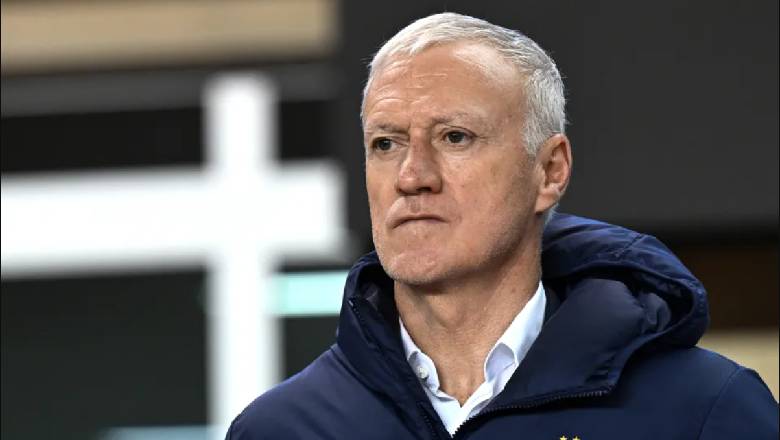
5 interesting facts about Didier Dechamps
1. He nearly walked away from football
2. A career built on hard work
3. Inspired by Jacquet
4. From player to coach
5. Rebuilding Les Bleus
Soccer24 has answered the question: “Who is the coach of France national football team?” while also presenting some interesting facts about Didier Dechamps.
Visit our site to explore the latest football results, breaking news, and in-depth predictions from our experts.
The Most Popular
-
 How many games are in a League 1 season? The 5 most successful clubs in league history
 -
 Missing World Cup 2026: Why is Italy so bad at football recently?
 -
 What is Argentina's biggest win in football history? When Argentina produced a stunning two-digit victory
 -
 Who scored the most goals against Liverpool? The former Manchester United star leads the way
 -
 Real Madrid all time XI: The greatest Galácticos ever assembled
 -
 What position does Bellingham play for Real Madrid? Key facts about England’s superstar
 -
 Top 5 greatest moments in World Cup history: The night Lionel Messi finally claimed his crown
 -
 How much did Real Madrid buy James Rodriguez? Top 5 interesting facts of Colombian midfielder
 -
 How much did Real Madrid pay for Luka Modric? Some fun facts about the Croatian midfielder
 -
 How much did Real Madrid buy Jude Bellingham?